Wednesday, September 16, 2020

A Brighter Summer Day


A BRIGHTER SUMMER DAY   ***

Edward Yang
1991


IDEA:  In early 1960s Taiwan, a student is caught in the middle of a turf war between two school gangs, one comprised of the kids of Mainland Chinese parents and the other of native Taiwanese. Meanwhile, his family members deal with their own social and political unrests under the country's military regime.


BLURB:  By now, Edward Yang’s four-hour opus is firmly cemented as one of the few true cornerstones of the Taiwanese New Wave. Across its lavish runtime, the film simultaneously evokes a primal, pivotal historical period of unsettled national character and, by virtue of its very existence, a (then) contemporary moment of economic and social efflorescence, albeit one fraught with its own share of political uncertainty. Merging a studied Eastern Asian cinema aesthetic with Hollywood-friendly idioms such as the youth picture and gangster drama, and allegorizing a sort of Taiwanese origin story within a meticulous, panoramic, and vividly tactile recreation of a time and place, Yang created something that would inevitably cast a formidable shadow on his and his compatriots’ subsequent explorations of life within the island nation. Yet, with full acknowledgment of the ambition and craft on display, perhaps it wouldn’t be erroneous to argue that the cultural significance and reputation of A Brighter Summer Day precede - and likely even eclipse - the film itself. For as intricately realized as it is on the levels of mise-en-scène and ensemble performance, the film is rather dramatically shapeless. A spectacular mid-narrative crescendo notwithstanding, Yang meanders fairly listlessly between scenes of domestic discontent and schoolyard angst, delivering individually impactful vignettes of disaffection, fraternity, and conflict that are not always ideally served by the baggy framework they float within. It’s as if the length of A Brighter Summer Day is intended to inform its scope and magnitude, rather than the other way around. Certainly, it’s fair to point out the faults of even the most venerable of cinematic leviathans; it would also be fair to excuse them in the face of such an admittedly expansive, historically resonant vision.

Friday, September 4, 2020

Stray Dogs


STRAY DOGS   ***

Tsai Ming-liang
2013

Stray Dogs Movie Review & Film Summary (2014) | Roger Ebert

IDEA:  A man struggles to make a living while raising his kids in homelessness.


BLURB:  Even in a filmography filled with as much anomie and anguish as Tsai Ming-liang’s, Stray Dogs is particularly despondent. In disgorged takes of harsh digital beauty, the filmmaker wallows in the simmering emotional distress of his homeless protagonist (Lee Kang-sheng) and his desolate surroundings, which often appear in shadow like post-industrial ruins. By day the man stands at an intersection, whipped by rain and wind, as he advertises a new apartment complex he’ll never be able to afford; at night he joins his two children for rest in a makeshift shelter. Tsai’s themes are fully accounted for, perhaps more explicitly than ever: crises of urban habitation, alienation, frustrated desire, the degrading effects of capitalism. But in its unrelenting moroseness, the film comes discomfortingly close to trafficking in that dubious category known as “miserabilism.” If anything about Stray Dogs exists to combat the sense that it’s more interested in aestheticizing poverty than seriously commenting on it, it’s the film’s mannered strangeness, an otherworldly quality that allows it to transcend the trappings of social realism. Tsai has always made Taipei askew and vaguely hostile, but here it’s basically slow-motion apocalyptic, a sludgy, decrepit dystopia of interiors that look as though they’ve weathered both tsunamis and nuclear blasts. In such expressionistic excesses, Stray Dogs can sometimes feel needlessly indulgent or even self-parodic. But the feeling it leaves one with goes to the bone - a mix of unspoken sadness and wonder encapsulated in a 13-minute shot that suggests there will always be a bittersweet, even stupefying refuge in art.

Monday, August 17, 2020

First Cow


FIRST COW   ***1/2

Kelly Reichardt
2019

First Cow - Wikipedia

IDEA:  In 1820s Oregon Territory, a fur trapper befriends a Chinese immigrant, and together start a baking business using a cow shipped to the area from France.


BLURB:  In the damp evergreens, muds, and ochres of an untamed Pacific Northwest, First Cow stages a microcosm of America in its incipient progress: toward industrialism and capitalism, and the social and material realities upon which they operate. Reichardt’s opening image of a cargo ship crawling across an Oregon river casts the historical events of the film as a direct prelude to these organizing systems of global contemporary life, effectively transforming even the most unassuming moments into harbingers of a faraway modernity. Yet Reichardt and screenwriter Jonathan Raymond are not didactic about these signals; by meticulously but only partially parceling out details of character and milieu, they create an immersive, in-the-moment portrait of the early American West that feels appropriately inchoate, filled with itinerant pursuits and narratives in media res. Supported by Christopher Blauvelt’s earthy lensing, First Cow is so impressive largely because of the authenticity this approach confers, making palpable a world not yet fully molded to the image of commerce, whose opportunities have been only provisionally tapped. It’s also impressive because Reichardt and Raymond refuse to view this fledgling American project in popular dualistic terms. If they’re somberly aware of the country’s founding and proliferating principles of exploitation and inequality, they’re also eager to celebrate the multiethnic relations that make up its cultural bedrock. First Cow is characterized by the poignant ambivalence that arises from this measured perspective: from the understanding that a cow’s milk can be both a gift of a nature and a privatized commodity.

Saturday, August 15, 2020

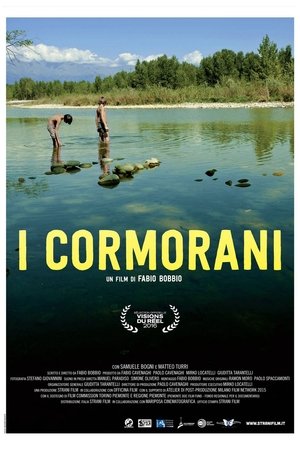
The Cormorants


THE CORMORANTS   **1/2

Fabio Bobbio
2016


IDEA:  Two close preteen friends hang out over one long summer.


BLURB:  Fully evoking the term “lazy summer,” The Cormorants fills its runtime with, well, idle time. Mop-headed prepubescents Samu and Matte - presumably lightly fictionalized versions of the boys who play them - swim in the river, lounge in the sun, hang out at a mall and a carnival, and stalk the forest. Sometimes they bike. Like other boys their age, they talk about sex and are prone to spontaneous roughhousing. The passage of time is indeterminate; the sun sets and rises, but the kids’ clothing never changes, and their activities vary little. Applying many of the principles of slow cinema to the coming-of-age film while also folding in docu-fictional realism, Bobbio has come up with something simultaneously leaden and sensuous, totally aimless and yet often absorbing in its ambling youthful languors. Almost perversely vacated of incident or character development, Bobbio seems only to want us to relive the dilated temporality and affects of childhood, using his opaque but deeply physicalized subjects as surrogates through which to experience the textures of young (male) leisure and bonding. DP Stefano Giovannini depicts the look and feel of afternoon sun on skin with tactile precision; studying the boys’ lithe bodies, at rest and in scrappy, homosocial play, we are transported to a stage of relative disinhibition, of free movement and intimate exploration. If The Cormorants doesn’t just fade away into uneventful nothingness, it’s because Bobbio and Giovanni have captured something pure about their subjects’ dispositions, in the jubilant and seemingly eternal crest of their youth.

Friday, August 7, 2020

The Store


THE STORE   ***1/2

Frederick Wiseman
1983


IDEA:  A look at the flagship Neiman Marcus store in Dallas, Texas.


BLURB:  Normally, one would reasonably expect a documentary set inside the confines of a lavish department store to function as fairly straightforward capitalist critique. This expectation seems to be fed during the film’s opening minutes, as an executive extols the almighty importance of sales, and extravagant apparel multiplies through mirrors into ego-affirming excess. But this is a Frederick Wiseman film, so judgment is suspended; any urge toward a polemical indictment is disarmed by mundane observation. In some ways, this approach makes the film’s view of consumer capitalism even more pointed. Instead of facilely underscoring the outrageous materialism of Neiman Marcus so as to land an easy jab at commodity culture, Wiseman simply shows the store in its quotidian workings, its systems and operations totally naturalized by the employees and customers who live by the logics of commerce. Wiseman does not need to insert didactic exposition or juxtapositions (although some cuts knowingly play up human/product parallels) to demonstrate the fundamental strangeness of a massive corporation, to reveal it as a synecdoche, for better or worse, of a culture elaborately constructed for unceasing consumption. Yet nothing here feels insidious, amazingly, not even a final banquet honoring Stanley Marcus held in front of what looks like a giant reproduction of the Vietnam flag. What one interprets as elitist, cultish, dehumanizing, or myopic is merely implicit, delivered by the apparatuses of consumer capitalism themselves.

Sunday, June 28, 2020

Careful


CAREFUL   ***1/2

Guy Maddin
1992


IDEA:  In an Alpine village where all residents must be extremely quiet to avoid setting off an avalanche, two brothers train to become butlers while competing for the affection of the same woman.


BLURB:  In Guy Maddin’s cinema of psychosexual delirium, unconscious drives and anxieties are never hidden and rarely subtextual: they always rush unabated across the surface, their primitive origins unearthed in tandem with the archaic filmic idioms the director has made a career of recreating. Careful is one of his early peaks, as well as a great exemplification of how he animates his psychoanalytic preoccupations – hyperbolically, absurdly – at the level of the text. Here, Maddin conjures an early Technicolor-style burlesque of lurid Freudianism, replete with overlapping Oedipal dramas, elaborate castration fantasies, death wishes, and, always, neurotically repressed desires fit to burst. The last point finds its ingenious geographic manifestation in the film’s Alpine town, wherein acting on one’s feelings – even so much as a sneeze – might literally unleash a deadly avalanche upon the community. This being Maddin, whose characters always fail spectacularly at suppressing their sweaty impulses, there’s little question that such feelings will erupt. As caution and propriety are repeatedly, perversely breached, Careful builds in hysteria, its biliously tinted frames and arch, deadpan dialog giving it the tenor of a waking fever dream. For Maddin, that’s just what cinema is – and often life, too.

Sunday, June 21, 2020

Boxing Gym


BOXING GYM   ***1/2

Frederick Wiseman
2010


IDEA:  A look at Lord's Gym in Austin, Texas.


BLURB:  Boxing Gym is a film of rhythms. To a degree greater than typical for Wiseman, it foregrounds physical routine over institutional detail, immersing the viewer in an environment characterized by its kinetic and sonic textures. This approach is largely apropos for a study of a gym, which lacks many of the intricate bureaucratic and social dimensions that Wiseman is so good at peeling back in portraits of more complex institutional spaces. That’s not to say Boxing Gym is deprived of socioeconomic, gender, and racial insights – the gym’s melting-pot clientele guarantees its reflection of not just Austin but America – only that the film privileges the effects of a more surface-level materiality. Diminishing the role of dialog, Wiseman returns to the repetitive images and sounds of athletic labor: the smack of gloves against punching bags and focus mitts, the beep of the timer, the dancelike footwork of practice drills. These actions grow nearly incantatory under Wiseman’s steady gaze, transcending their practical function to become something closer to meditation, experienced both individually and among likeminded neighbors. Boxing Gym may be lighter on penetrating social revelations than other films by the director, but its quotidian audiovisual symphony still manages to get at something tactilely profound about the work of focused recreation.